PARTITION
CULTURAL IMPACTS
Religion in Partition
"South Asia exhibits a strong history of interfaith engagement and hybrid religious identities. Several edifices built by medieval Muslim rulers in South Asia are inscribed with Hindu religious symbols, such as images of the lotus in the Taj Mahal."
~Karim H. Karim, professor
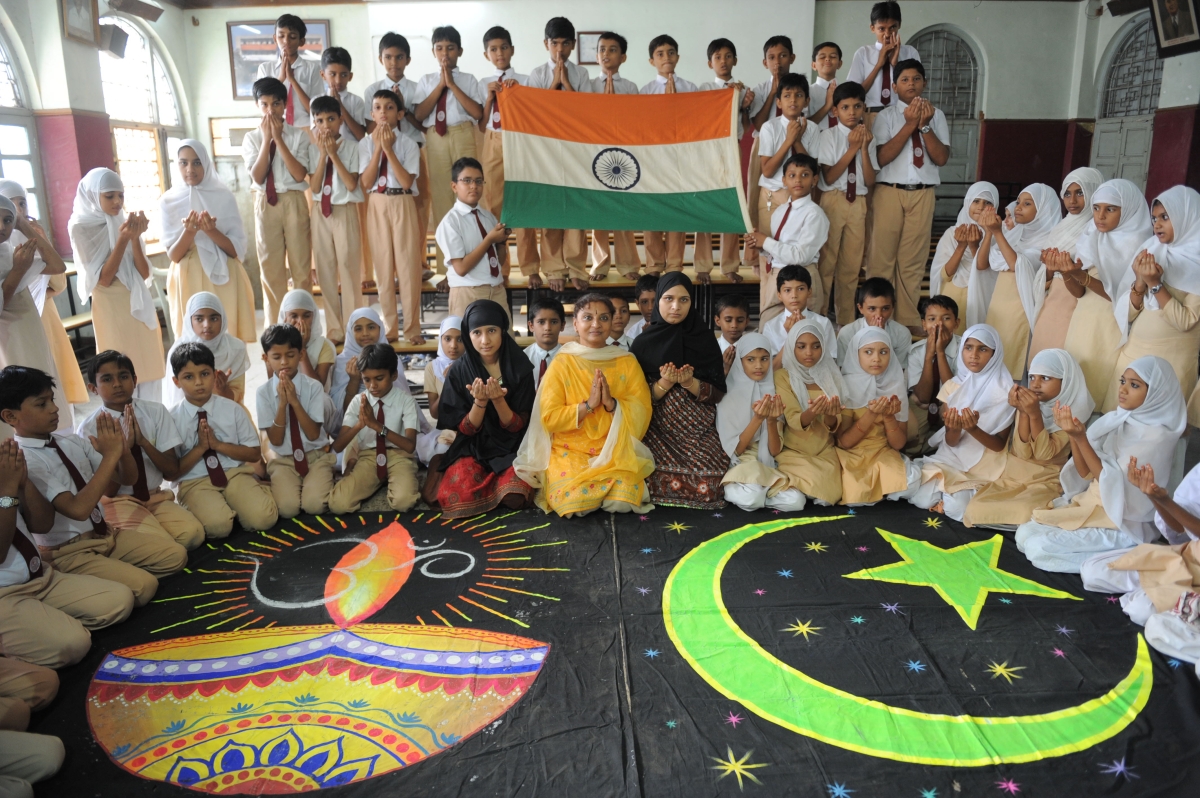
Students and teachers from Anjuman-E-Islam school pose with Hindu and Islamic religious designs. 2010. Facebook,
Partition was driven by the demands of Indian Muslims for a separate state. Partition marked a dark turning point in the subcontinent's history, in which Muslims, Christians, Hindus, and Sikhs had lived in relative harmony for centuries. For most of Mughal (the Indian empire before British occupation) rule, Sikhs and Hindus were treated fairly by their Muslim rulers. When the British came, they pitted Muslims against Hindus, thus furthering religious divide. As they fought to reach their new homelands, the subcontinent's religious plurality began to crumble.
"By the end of the decade, almost all the Hindus of Karachi had fled, while two hundred thousand Muslims had been forced out of Delhi. The changes made in a matter of months remain indelible seventy years later."
~William Dalrymple, historian
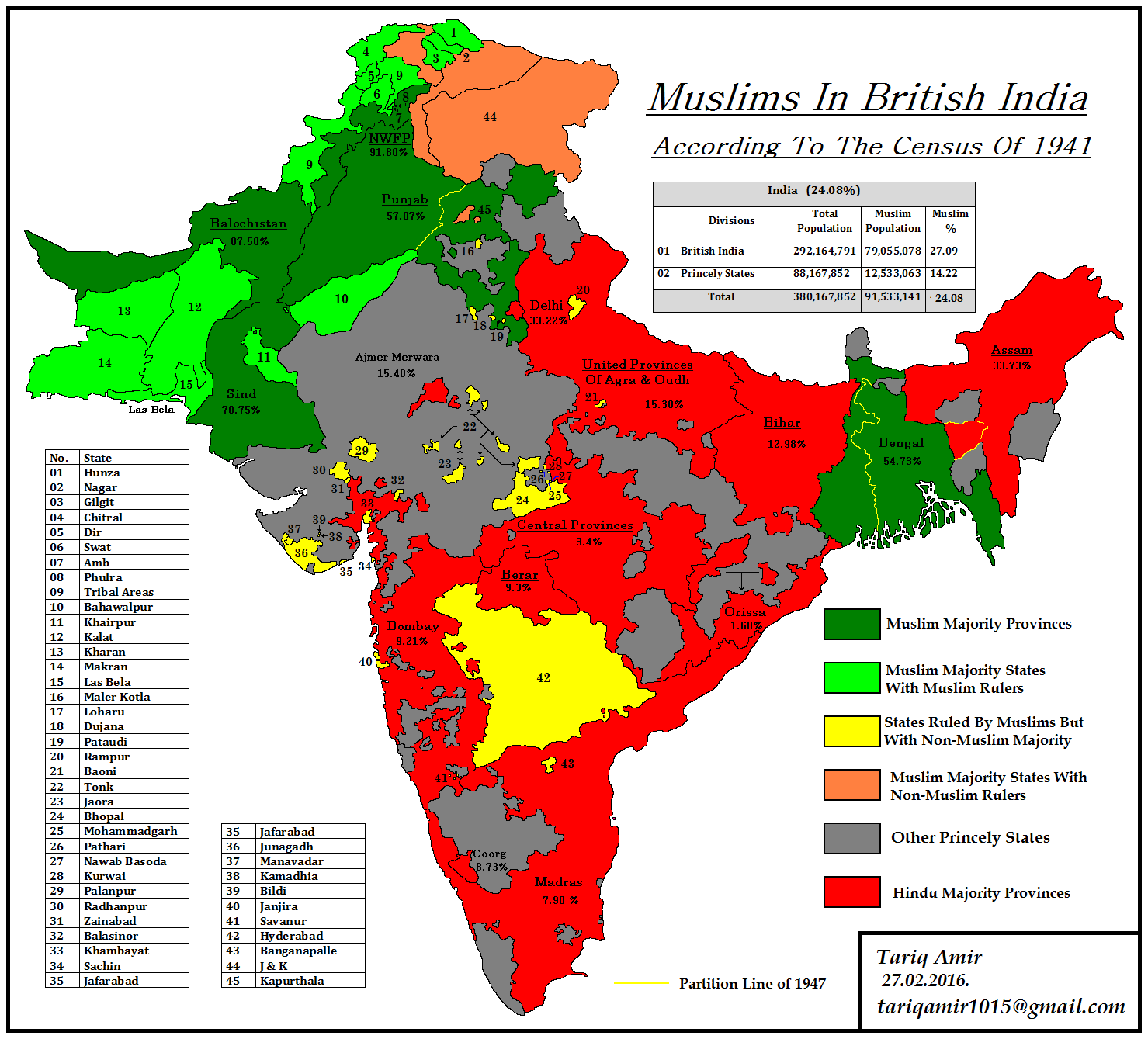
Amir, Tariq. Muslims in British India According To The Census of 1941. 24 Oct. 2020.
As the Muslim League argued for a separate state, India's provinces were split based on whether the majority of that population followed Hinduism or Islam. In areas where they were about equal, like Punjab and Bengal, the provinces were split haphazardly.
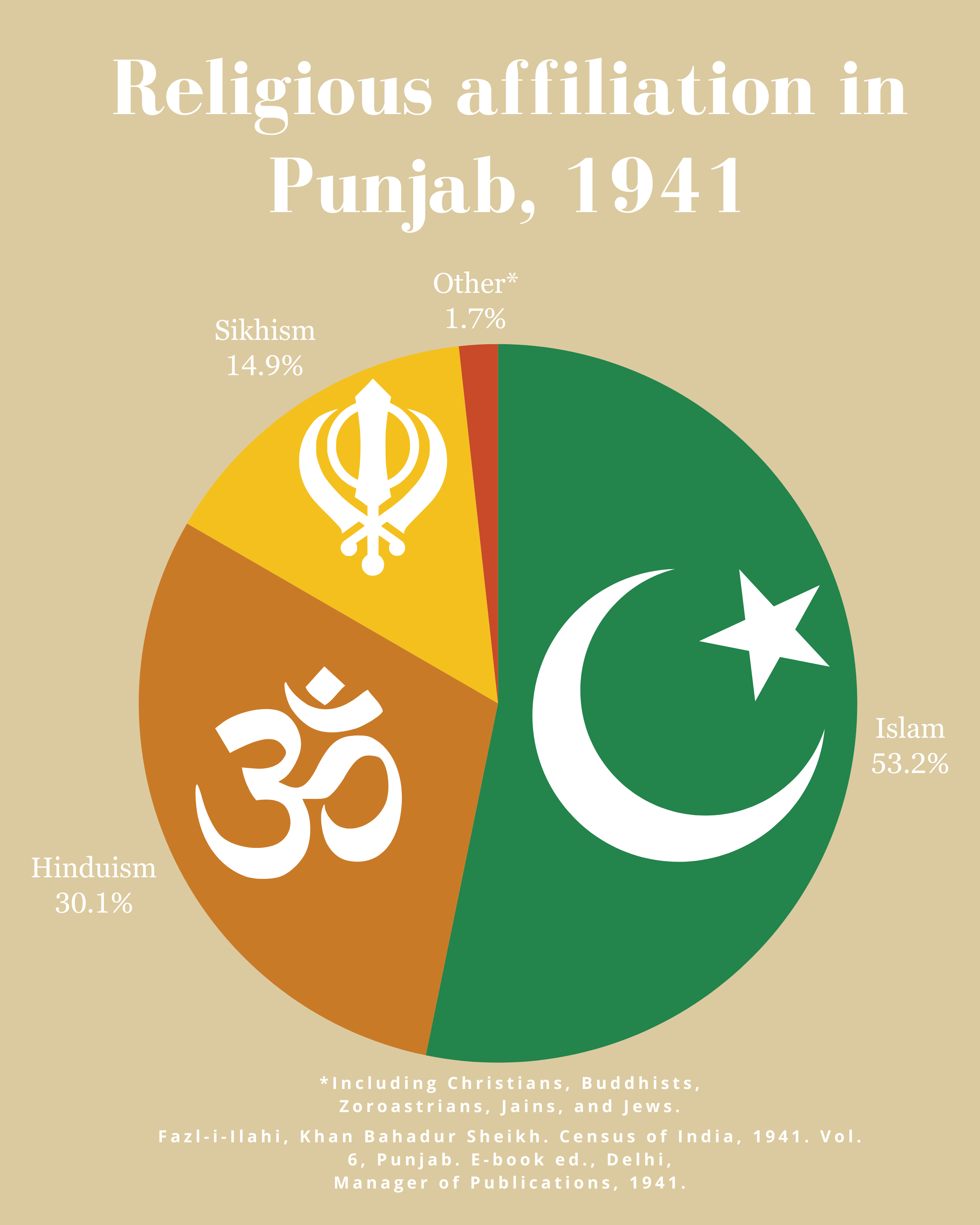
While India was created as a secular nation with a Hindu majority, Pakistan remains the only nation specifically created in the name of Islam. Pakistan was necessary to protect the rights and interests of the subcontinent's Muslim minority.
Partition impacted many individual lives as well. About 1 million people died as a result of the conflict (Haimanti). About 14.5 million individuals migrated during the event, with near-equal numbers of Hindus and Muslims escaping violence in their respective countries.
Division of Language
The Partition of India sharply contributed to the Hindi-Urdu controversy within present-day India. While Hindi and Urdu are mutually intelligible spoken languages, they have different written forms.
"From the grammatical point of view, there is not much difference between Hindi and Urdu. One distinction is that Urdu uses more Perso-Arabic prefixes and suffixes than Hindi."
~Editors of Encyclopaedia Britannica
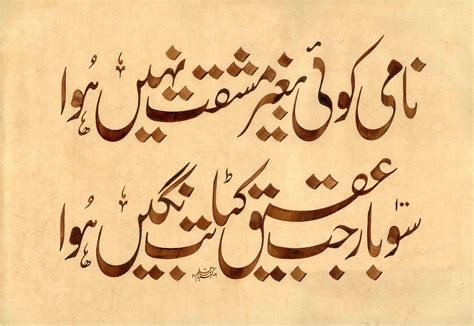
Urdu calligraphy in the Perso-Arabic script
Urdu Calligraphy. May 2021.
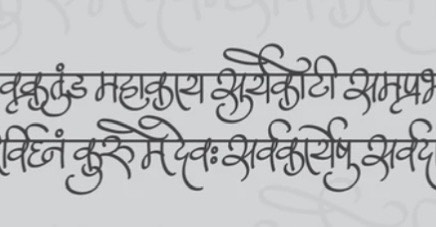
Hindi calligraphy in the Devangari script
Vector artwork of ancient and auspicious mantra in Sanskrit script saying Vakratunda Mahakaya Suryakoti Samaprabha. Shutterstock.com, 13 March 2023.
"In the past, politicians elected to state assemblies have been barred from taking oath in Urdu...Petitions have been filed seeking the removal of Urdu words from school textbooks."
~Zoya Mateen, journalist
Hindi-Urdu disagreements began in the 1860s when some Indian schools refused to teach Urdu due to its Arabic script, opting to teach the Devanagari written form. After Partition, Pakistan adopted Urdu as its national language, antagonizing Indian nationalists against Urdu. Today, Urdu is relegated to a second-class status in India, as teaching of the language decreases annually (Rajeev).

Hapur Junction railway station - Station board. 27 May, 2014.
"This 'Urdu' was not seen as a Muslim language, as it is today, but had a class element - it was the tongue spoken by the elite of north India, which included Hindus as well."
~Zoya Mateen
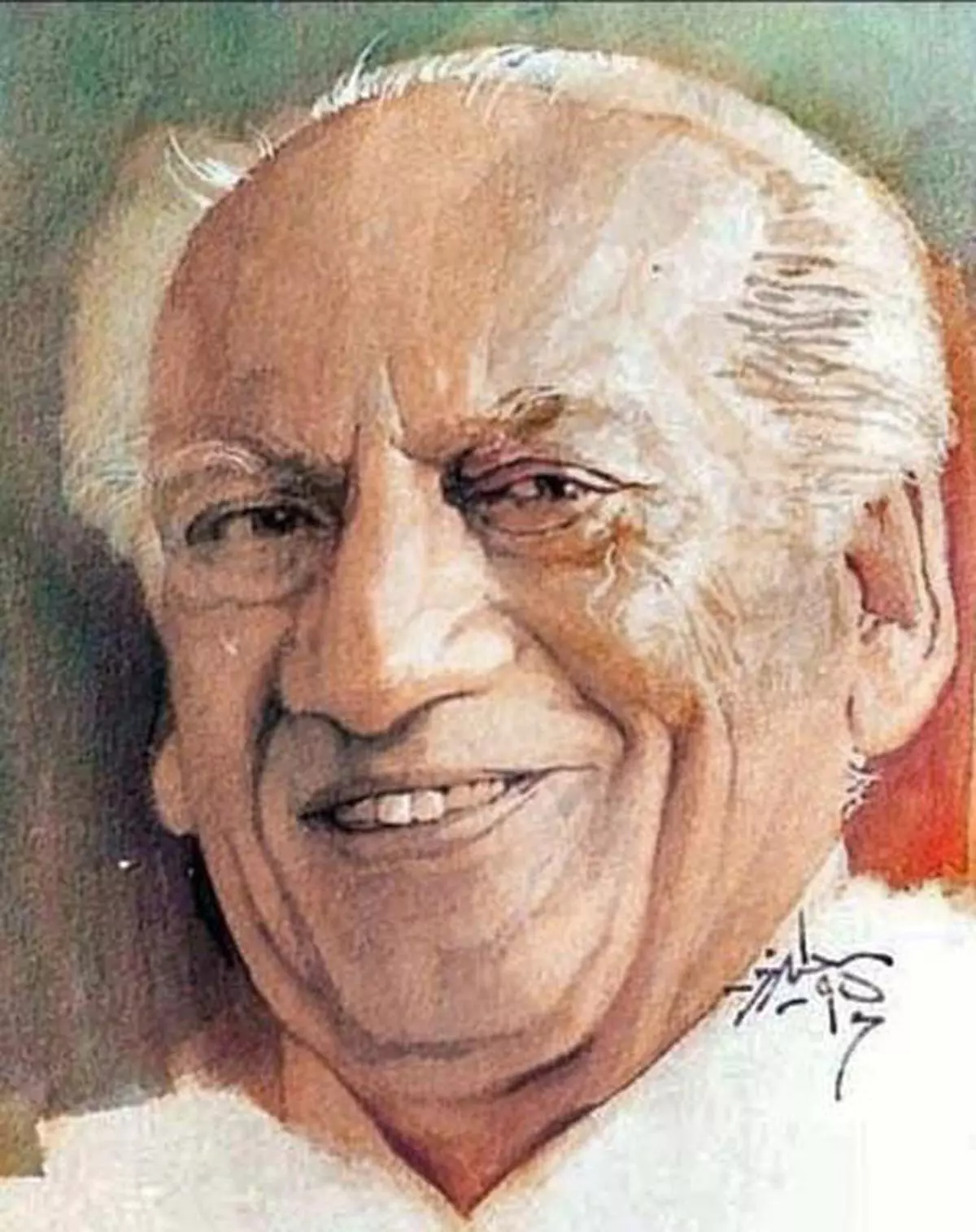
“Faiz Ahmed Faiz: A Poet of Defiance, Transcending Ideology.” Frontline - the Hindu, 18 Jan. 2020.
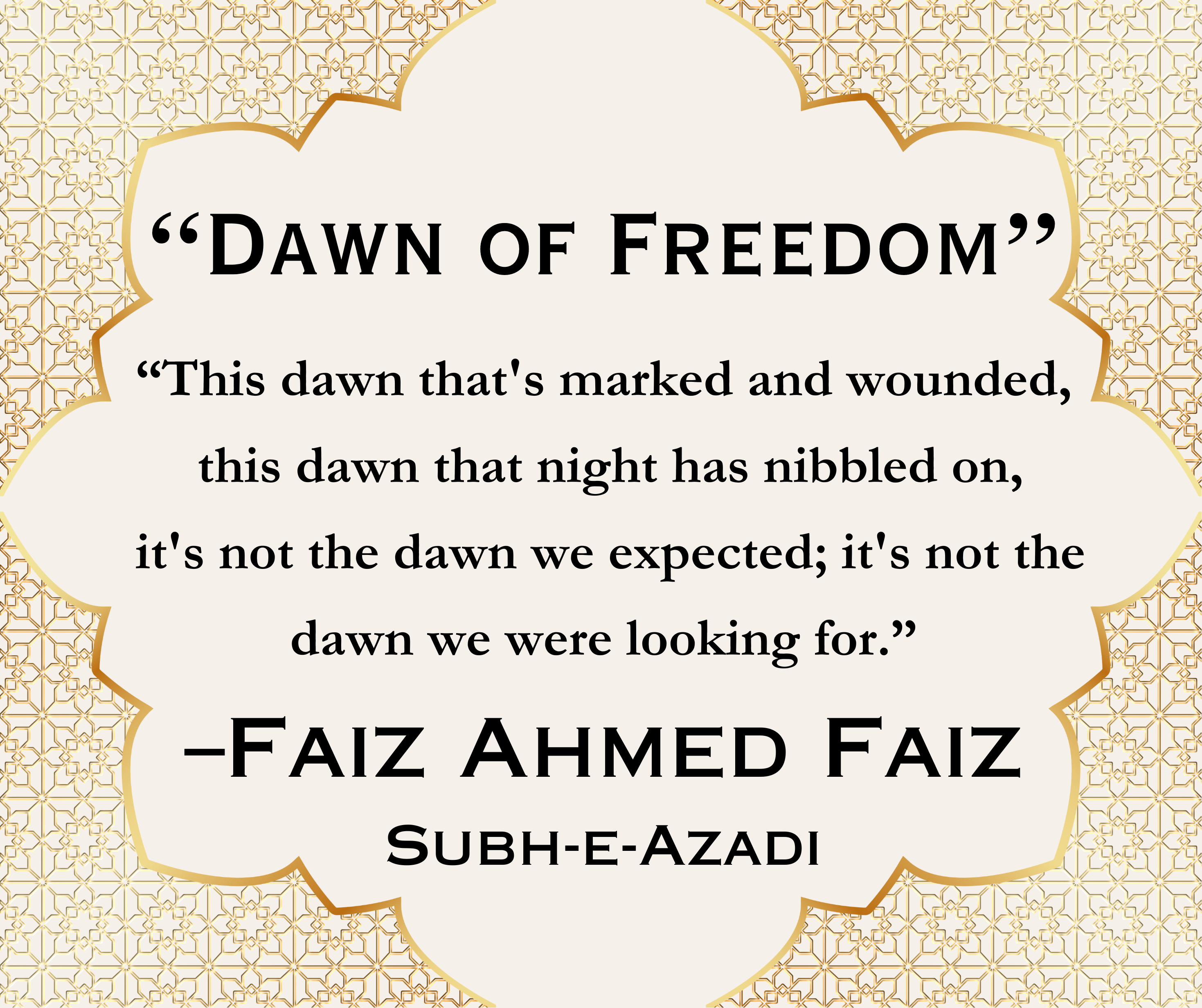
Much Urdu literature was written about Partition, including by the poet Faiz Ahmed Faiz. His nazm (poem), "Subh-e-Azadi" (Dawn of Freedom) was created in the wake of Partition, portraying its devastating impact. Despite desiring a Muslim nation, Faiz, like many, disapproved of the event's execution.