PARTITION
AFTERMATH
"The partition split my family. My mother's family was left behind in India while some of her family and she went to Pakistan" (Shah).
~Farzana Shah, daughter of Partition survivor
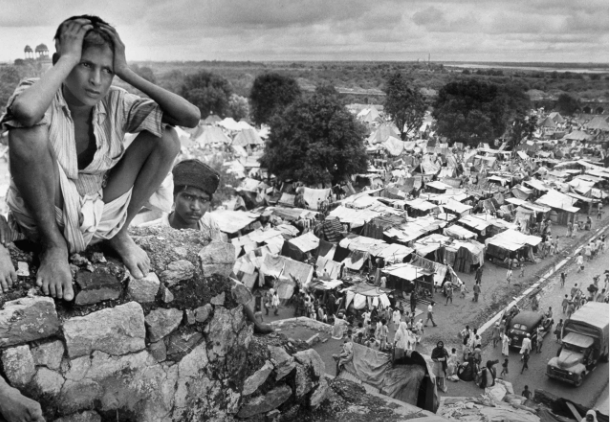
Bourke-White, Margaret. Children rest atop rocks at a refugee camp. 1947. LIFE.
BBC. “‘This Is Not My Country’ - My Family, Partition and Me: India 1947 - Episode 1 | BBC One.” YouTube, YouTube Video, 9 Aug. 2017, www.youtube.com/watch?v=Yw411sAHRSs.
"In the beginning of 1947, the issue of the Partition of Hindustan [India] came about in full force. Our factory was taken over by the Gurkha Army [a military regiment] during the Partition. The army started firing on us, and so we ran out of the house in order to save our lives. Later, the Sikhs looted our home and subsequently lit it on fire. We then moved to Lahore as refugees."
-Nasir Ahmad ibn Muhammad Ismael Khan, Partition survivor
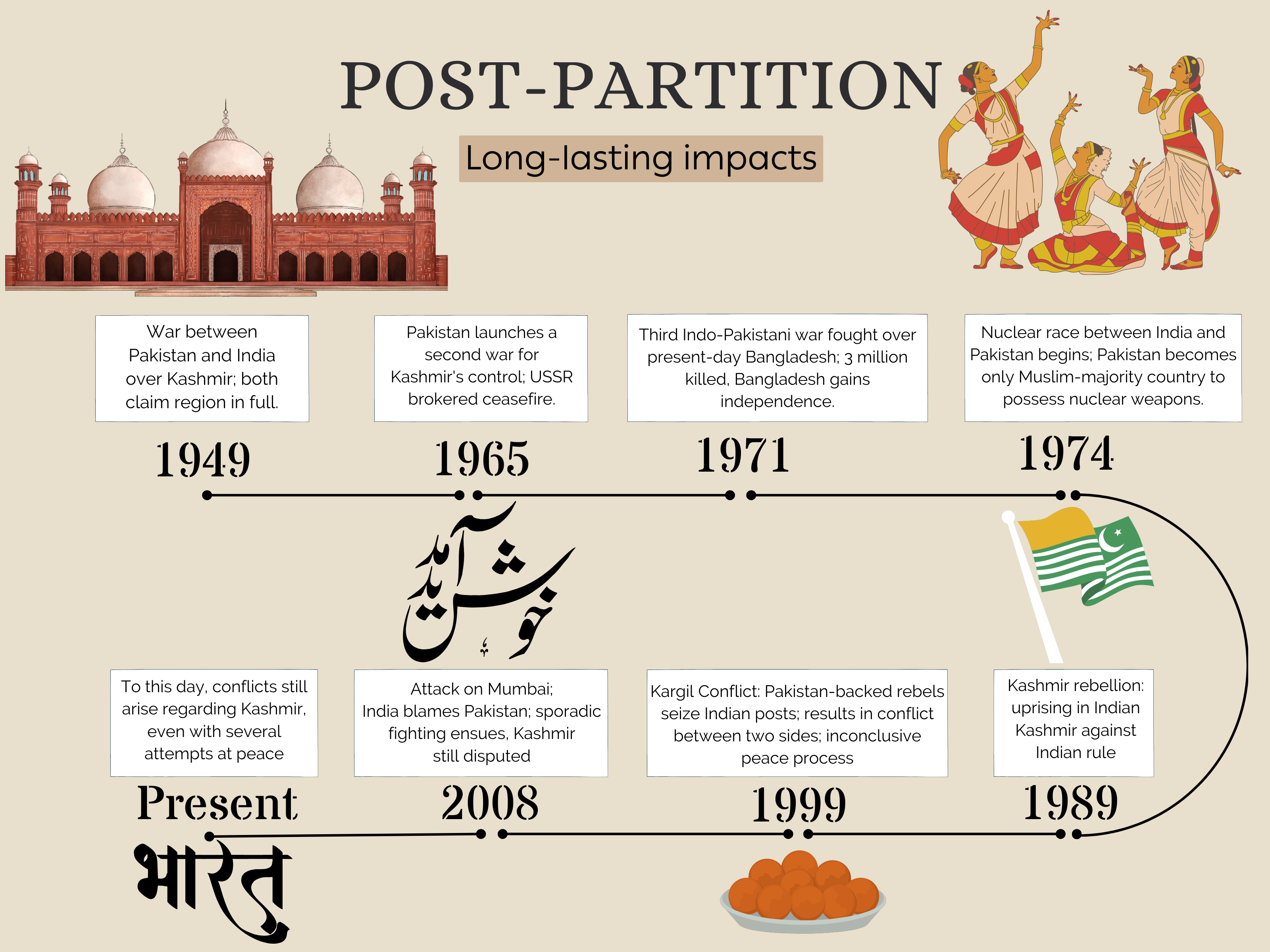
The partition of the Indian sub-contenient marks a turning point in history that still has a remaining effect in current affiars. The divide continues to hurt families as India and Pakistan have severely limited visas given to nationals of the other nation. Today, the two countries’ relationship is far from healthy. Kashmir remains as an area that represents this conflict; both countries are nuclear-armed. This represents Indian-Muslims are frequently suspected of harboring loyalties towards Pakistan; non-Muslim and Muslim minorities alike in Pakistan are increasingly vulnerable thanks to the so-called Islamisation of life there since the 1980s. Seven decades on, well over a billion people still live in the shadow of Partition.